
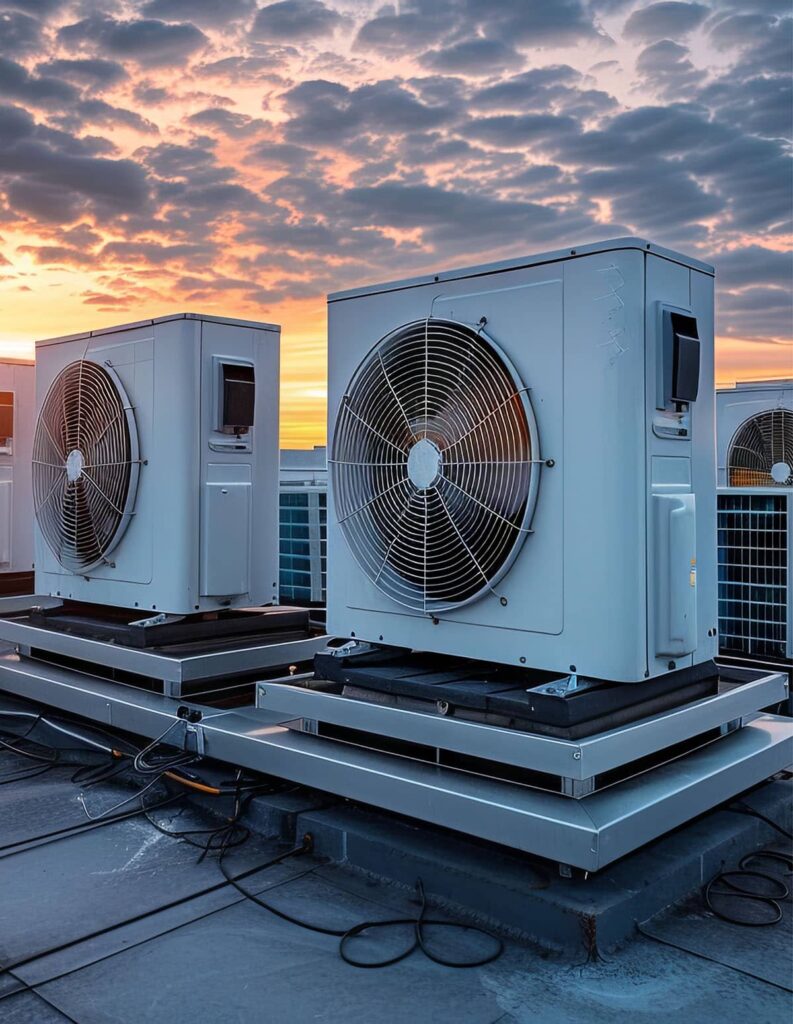
For many years, cooling was viewed as a background utility essential, but rarely strategic. If systems were running and temperatures were within tolerance, HVAC rarely made it onto the boardroom agenda. That mindset no longer holds.
Today, cooling is business critical. From data centres and retail estates to manufacturing plants, healthcare facilities and commercial offices, HVAC performance now directly impacts uptime, revenue, compliance, sustainability and brand reputation. In short: when cooling fails, businesses fail.
At Weatherite, we see this shift first-hand across every sector we support.
From Comfort System to Critical Infrastructure
The role of cooling has fundamentally changed. Modern buildings are no longer passive spaces; they are technology-driven environments packed with heat-generating equipment, digital infrastructure and operational dependencies.
Data centres are the most obvious example. Even minor temperature fluctuations can result in equipment throttling, downtime or catastrophic failure with financial consequences measured in thousands per minute. But the same principle increasingly applies elsewhere:
- Retail environments rely on HVAC to protect customer comfort, stock integrity and energy efficiency
- Manufacturing processes depend on temperature control for quality, safety and repeatability
- Healthcare facilities require precise environmental conditions to protect patients and equipment
- Commercial buildings must balance occupant wellbeing with energy performance and compliance
Cooling is no longer just about comfort. It’s about resilience.
Ageing Assets, Rising Risk
One of the biggest risks facing organisations today is reliance on ageing HVAC infrastructure. Many systems installed 20–30 years ago were never designed to cope with today’s thermal loads, operational hours or efficiency expectations.
Yet these systems are often pushed harder than ever running 24/7, supporting higher occupancies, denser IT loads and stricter performance standards.
The result?
- Increased failure rates
- Rising energy costs
- Difficulty sourcing replacement components
- Reduced redundancy
- Greater exposure to unplanned downtime
Cooling failures are rarely convenient. They tend to occur at peak demand during heatwaves, trading peaks or mission-critical operations precisely when systems are least forgiving.
Sustainability, Regulation and the Pressure to Perform
Cooling is also now under intense scrutiny from a sustainability and compliance perspective.
Rising energy costs, net-zero commitments and regulatory frameworks are forcing businesses to rethink how cooling systems are designed, operated and maintained. Inefficient HVAC systems don’t just cost more to run they undermine ESG strategies and expose organisations to reputational and regulatory risk.
Modern HVAC design must now deliver:
- High efficiency under real-world operating conditions
- Lower carbon impact across the asset lifecycle
- Compliance with evolving standards and legislation
- Flexibility to adapt as building use changes
This is why retrofit, refurbishment and intelligent upgrade strategies are becoming just as important as new-build solutions.
Cooling Strategy, Not Just Equipment
One of the most common misconceptions we encounter is the idea that cooling performance is defined solely by equipment selection. In reality, cooling is a system-wide strategy.
Effective cooling depends on:
- Correct system sizing and airflow design
- Intelligent control strategies
- Integration with building management systems
- Redundancy and resilience planning
- Ongoing service, monitoring and optimisation
A high-performance chiller or air handling unit can only deliver results if it’s part of a well-engineered, well-maintained ecosystem.
At Weatherite, our in-house design, manufacturing, installation and service capabilities allow us to take a whole-life viewof cooling from concept through to long-term performance.
Business Continuity Depends on Cooling Continuity
As businesses become more digitised, automated and energy-intensive, the tolerance for cooling failure continues to shrink. Downtime doesn’t just disrupt operations it damages trust, contracts and customer confidence.
Forward-thinking organisations are now asking different questions:
- What happens if this system fails tomorrow?
- How resilient is our cooling strategy under peak demand?
- Can our infrastructure adapt to future load increases?
- Are we sweating assets beyond their intended lifespan?
These are no longer engineering-only questions. They are board-level concerns.
The Future: Smarter, More Resilient Cooling
Looking ahead, cooling will only become more critical. AI workloads, electrification, heat recovery, hybrid working patterns and decarbonisation targets are all reshaping building environments.
The HVAC systems that succeed will be those that are:
- Designed for adaptability, not just today’s load
- Engineered for efficiency across the full operating envelope
- Supported by proactive service and lifecycle planning
- Aligned with long-term business strategy
Cooling is no longer a hidden utility. It is a strategic asset, one that underpins performance, resilience and growth.
Why This Matters
At Weatherite, we believe the future of HVAC lies in engineering-led thinking, not box-ticking solutions. Whether extending the life of existing assets, designing high-performance cooling for critical environments, or supporting clients through long-term service partnerships, our focus is simple:
Keeping businesses running safely, efficiently and sustainably.
Because in today’s world, cooling isn’t optional.
It’s business critical.