
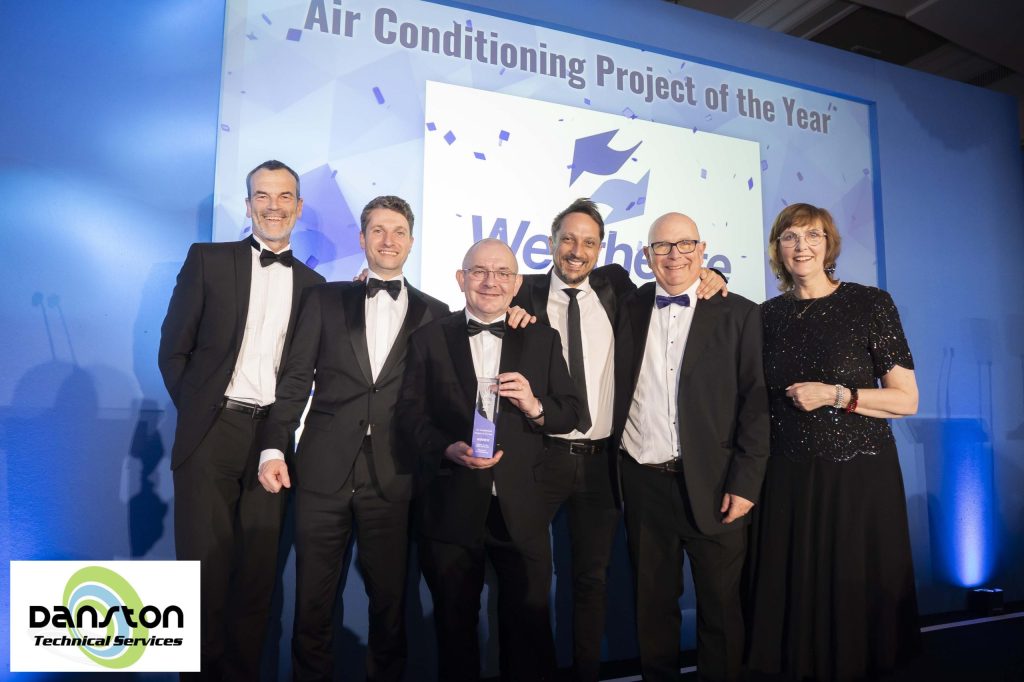
Winning a prestigious city-centre commercial project takes more than competitive pricing. It takes technical credibility, a collaborative approach, proven manufacturing capability and the confidence to solve problems other suppliers may shy away from. That is exactly what Weatherite Air Conditioning brought to the Pilgrim Quarter Office Block development in Newcastle city centre. From the outset, this was a project that demanded more than a standard HVAC package, and Weatherite’s ability to deliver a bespoke, buildable and high-performance solution is what made the difference.
Pilgrim Quarter is a landmark office development designed to meet the expectations of a modern multi-storey commercial building, with a strong focus on indoor air quality, energy efficiency and performance. Weatherite was commissioned to design and manufacture eight high-capacity air handling units for the scheme, with six roof-mounted units specified to deliver 15m³ per second. This was a substantial and technically demanding requirement, and it called for a contractor with the in-house engineering expertise and manufacturing control to deliver a solution tailored to the realities of the site.
What helped Weatherite stand out was not simply the ability to supply equipment, but the ability to think differently when the project became more complex. The original concept was based on standard AHUs connected to separate air-to-water air source heat pumps. However, as the design developed through Stage 2 and Stage 3, significant roof-level space restrictions emerged. These constraints meant separate central plant could not be accommodated alongside the air handling units, creating a serious challenge for the project team. Rather than forcing a compromised solution, Weatherite responded with a more intelligent one.
Weatherite proposed a bespoke packaged approach that transformed the viability of the scheme. By integrating each AHU with a reverse cycle heat pump within the original footprint allocated for the air handling units, the company removed the need for separate central plant altogether. This was not a minor design tweak. It was a project-defining intervention that enabled all MEP plant and equipment to fit within the available planning-approved space while also improving overall system performance. It is this kind of engineering problem-solving that wins projects of this scale and complexity.
A major reason clients and contractors place confidence in Weatherite is its willingness to get involved early and work collaboratively. On Pilgrim Quarter, Weatherite was heavily involved at design stage, working closely with Cundall and Derry Building Services to ensure the technical specification could be achieved without compromise. That close working relationship meant potential issues were identified and resolved early, reducing risk and helping the programme stay on track. For developers and contractors, that level of proactive support is invaluable, especially on major city-centre schemes where delays and redesigns can carry a significant cost.
Weatherite’s in-house manufacturing capability also played a crucial role in securing and delivering the project. All eight units were manufactured at the company’s West Midlands facility, giving the project team confidence in quality, programme control and testing standards. Given the bespoke nature of the design and the critical demands of the application, rigorous volumetric and acoustic testing was carried out at Weatherite’s Oldbury facility before dispatch. The client team, consultants and MEP contractor were all present during factory acceptance testing, enabling them to witness performance first-hand and approve the units before they reached site. That level of transparency and accountability reinforces why Weatherite is trusted on complex commercial developments.
The project also highlighted Weatherite’s ability to combine innovation with practicality. Because of the sheer size of the units and the logistical challenges of a busy Newcastle city-centre site, each AHU was designed in transportable sections. This modular strategy made delivery possible without the complications associated with oversized loads and enabled straightforward mechanical and electrical reconnection on site. It was a smart response to real-world constraints and another example of why Weatherite’s solution stood apart: it was not just technically impressive on paper, it was designed to work in practice.
Performance and sustainability were also central to Weatherite’s winning offer. Each packaged unit reduced the need for multiple individual components, transportation requirements and on-site installation complexity. The use of R513A refrigerant, a low Global Warming Potential A1 rated gas, reinforced the environmental credentials of the scheme, while compliance with ERP requirements and Part L Building Regulations ensured the units met the rigorous standards expected of a modern office development. Additional features including digital scroll compressors, fan walls and high-grade filtration systems further strengthened the quality and long-term value of the solution.
There were clear commercial advantages too. The fully packaged nature of the units reduced the need for on-site interconnecting pipework and additional wiring, improving quality assurance and cutting installation time. With fewer individual systems and components to maintain, the end user also benefits from lower ongoing service and maintenance costs. Weatherite further strengthened its offer with an extended warranty arrangement, giving the contractor and client additional peace of mind. These practical cost and programme benefits matter enormously when clients are selecting the right delivery partner.
The strength of Weatherite’s contribution is reflected in the words of Craig Leivers, Associate Director at Derry Building Services, who described the company as approachable, professional, technically brilliant and highly collaborative. He praised Weatherite’s modular “one box” solution, the successful factory acceptance testing, the ease of reconnection on site and the way the team responded when unexpected structural issues required last-minute changes. Most importantly, he noted that Weatherite “owned the project” and worked quickly to find solutions that kept the programme moving. That kind of endorsement says a great deal about why Weatherite won this project and why it continues to be trusted on demanding, high-profile developments.
Pilgrim Quarter is more than a successful installation. It is a clear example of what clients are really buying when they choose Weatherite: bespoke engineering, dependable manufacturing, collaborative delivery and the confidence that even complex site constraints can be turned into a high-performing solution. In a competitive market, that is what wins projects.