
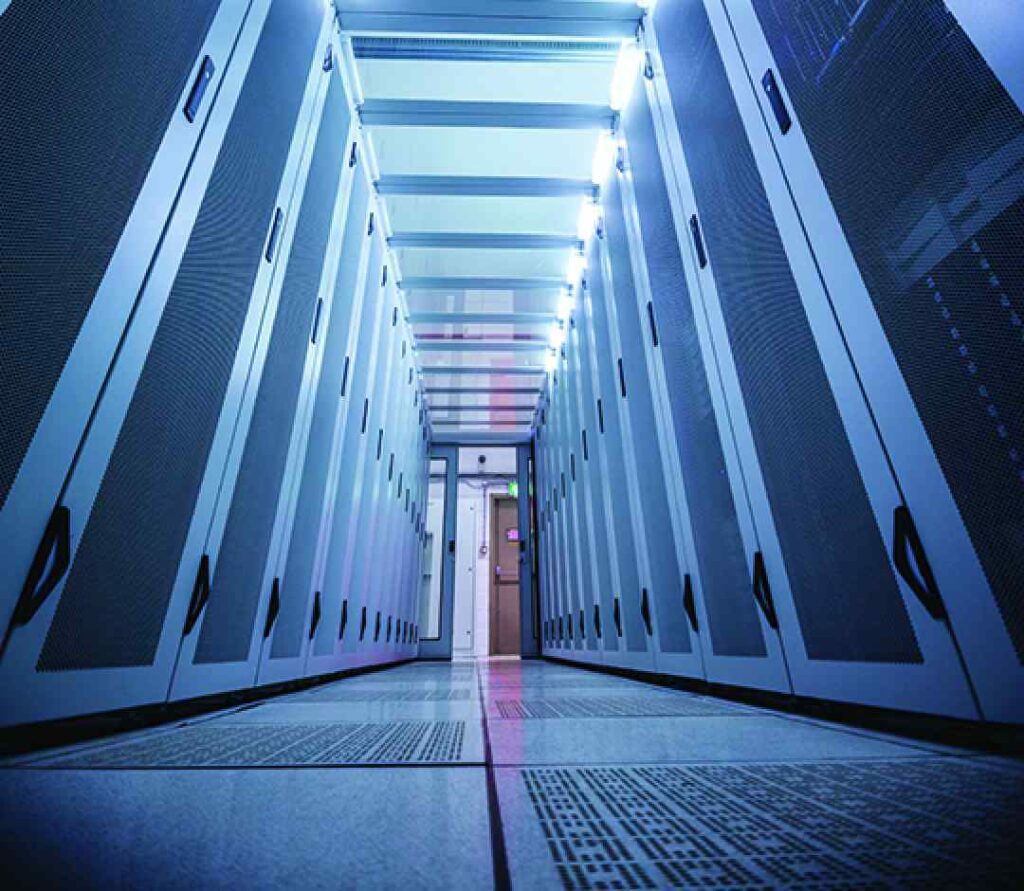
As demand for digital services continues to accelerate, data centres are under increasing scrutiny for their energy consumption and environmental impact. While much of the industry focus has centred on IT efficiency and renewable energy procurement, one of the most significant contributors to operational power demand often receives less attention: cooling infrastructure.
In high-density, mission-critical environments, cooling systems account for a substantial proportion of total energy use. According to the International Energy Agency, data centres consume approximately 1–1.5% of global electricity, with cooling representing a major share of that footprint. As facilities expand to support AI workloads, cloud services, and edge computing, managing thermal energy more intelligently is becoming critical.
One area now gaining renewed attention is heat recovery not simply as a sustainability initiative, but as a practical strategy for improving efficiency, resilience, and long-term operational value.
Reframing Heat as a Resource
Heat recovery involves capturing thermal energy that would otherwise be rejected and repurposing it for productive use. In data centres, heat is generated continuously by IT equipment and extracted by cooling systems to maintain stable operating conditions.
Historically, cooling strategies were designed to remove heat as efficiently as possible and expel it from the site. However, rising energy costs, tightening carbon targets, and increasing pressure from regulators and planning authorities are forcing a rethink of this linear approach.
Because data centres operate 24/7, they generate a consistent and predictable supply of low-grade heat. This reliability makes them particularly well suited to heat recovery when compared to intermittent industrial processes or seasonal energy loads.
The Scale of the Opportunity
The potential impact of heat recovery is especially significant in urban environments where data centres are often located close to residential and commercial developments.
An AECOM-commissioned study examining London’s data centre estate found that waste heat currently expelled into the atmosphere could, if captured and redistributed, theoretically provide enough thermal energy to heat hundreds of thousands of homes each year. While not all of this heat is practically recoverable, the findings clearly highlight the scale of untapped opportunity within dense data centre clusters.
For operators, this reframes the conversation. Heat recovery is no longer just about incremental efficiency improvements within a single facility; it is about how data centres can contribute positively to wider energy systems and local infrastructure.
Technical Challenges and Design Considerations
Despite its clear benefits, heat recovery is not without complexity. Many existing data centres were designed around heat rejection rather than reuse, meaning retrofit projects must carefully address technical, spatial, and commercial constraints.
Effective heat recovery depends on several key factors:
- the temperature at which heat is available
- the method used to transfer and, where necessary, upgrade that heat
- integration with building management systems
- alignment between heat supply and demand profiles
Modern HVAC solutions are increasingly designed to overcome these challenges. Indirect air cooling systems, hybrid architectures, and modular plant designs make it easier to integrate heat recovery without compromising resilience or uptime. When paired with intelligent controls, these systems can operate dynamically, responding to IT load and external conditions to maximise efficiency.
Practical Applications In and Beyond the Data Centre
Heat recovery can be deployed in several ways depending on site layout and location.
Within a data centre campus, recovered heat can be used for space heating in offices, control rooms, and ancillary areas, as well as for domestic hot water pre-heating. In multi-building environments, heat can also be shared with adjacent facilities that have compatible thermal demands.
In urban settings, data centres are increasingly being considered as anchor loads for district heating networks. By exporting surplus heat to nearby residential or commercial developments, operators can significantly improve overall energy utilisation while strengthening relationships with local authorities and planning bodies.
Supporting Compliance and ESG Objectives
Heat recovery aligns closely with recognised sustainability and compliance frameworks, including BREEAM, LEED, and the EU Code of Conduct for Data Centres. It also supports UK reporting requirements such as Streamlined Energy and Carbon Reporting (SECR) by delivering measurable reductions in Scope 1 and Scope 2 emissions.
From an ESG perspective, heat recovery allows operators to demonstrate tangible operational decarbonisation rather than relying solely on offsetting strategies.
Forward Planning for a Heat-Constrained Future
As data centre capacity continues to expand, forward planning will be essential. Decisions made early in the design process — around cooling architecture, plant layout, and system integration — will determine whether facilities can adapt to future efficiency, regulatory, and sustainability demands.
Heat recovery is most effective when considered at the design stage, even if it is not deployed immediately. Designing systems with future reuse in mind preserves flexibility, minimises disruption, and unlocks long-term value as local heat demand, policy incentives, and infrastructure evolve.
With over 50 years of experience in HVAC innovation, Weatherite has witnessed the industry’s evolution from purely mechanical cooling to highly integrated, digitally controlled systems supporting some of the most demanding environments in the UK. That perspective is increasingly important as expectations around energy performance continue to rise.
Data centres will ultimately be judged not only on uptime and efficiency today, but on how well they are prepared for the energy challenges of tomorrow. When embedded within a forward-thinking design strategy, heat recovery offers a practical way to transform a long-standing challenge into a lasting advantage.